27/9/1942 to 17/3/1944
Wing Commander Russell Faulkner “Digger” Aitken, A.F.C. OBE, CBE
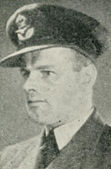
Russell Faulkner Aitken was born in Outram, in Otago, New Zealand on 15 September 1913. Initially working on the family farm after leaving school, Russell Aitken came to England in 1937 and applied for a Short Service Commission. Promoted to Flying Officer in November 1939. He was attached as an Instructor with The Fleet Air Arm and had experience of flying off aircraft carriers. He later served on HMS Ark Royal and on one voyage in February 1940, he was swept into the sea when the ship was taking evasive action during a bombing attack mounted by the Luftwaffe. The only man lost overboard in the incident; he was picked up by a following destroyer. During the campaign in Norway, Aitken flew a Hawker Hurricane off Ark Royal to Trondheim.
Having an affinity to the sea, one of his claims to fame was developing the Air-Sea Rescue Service using an amphibious aircraft, the Walrus, a biplane that had been in RAF service from 1933. Aitken rescued 35 pilots. He was then posted to 3 Squadron protecting Scapa Flow. In 1940 he was promoted to Flight Lieutenant and eventually was promoted to Squadron Commander.
In April 1942 he was posted to 11 Group HQ, Fighter Command. Aitken was tasked with helping with the organisation of London’s night-time defences, a stressful post as Germany were increasing their bomber raids. He went on to plan intruder raids which resulted in him being promoted to Wing Commander. In September 1942 he was appointed as Station Commander to Hawkinge, at 29 he was the youngest Station Commander. In 1943 he was awarded the Air Force Cross for his work in Night Fighter Development.
On 29th September 1942 Aitken came to RAF Bradwell Bay in Essex as the Station Commander. His previous service was very suitable to command this base, he was at Bradwell until 17th March 1943.
After leaving Bradwell Aitken was to remain in the RAF, which he left in 1957 with the rank of Group Captain and a CBE. He returned to New Zealand and settled in Porirua, where he was a justice of the peace. He died on 25 February 1989 at Kenepuru Hospital in Wellington. His remains were cremated and interred at Porirua Cemetery. His wife had predeceased him by five years.